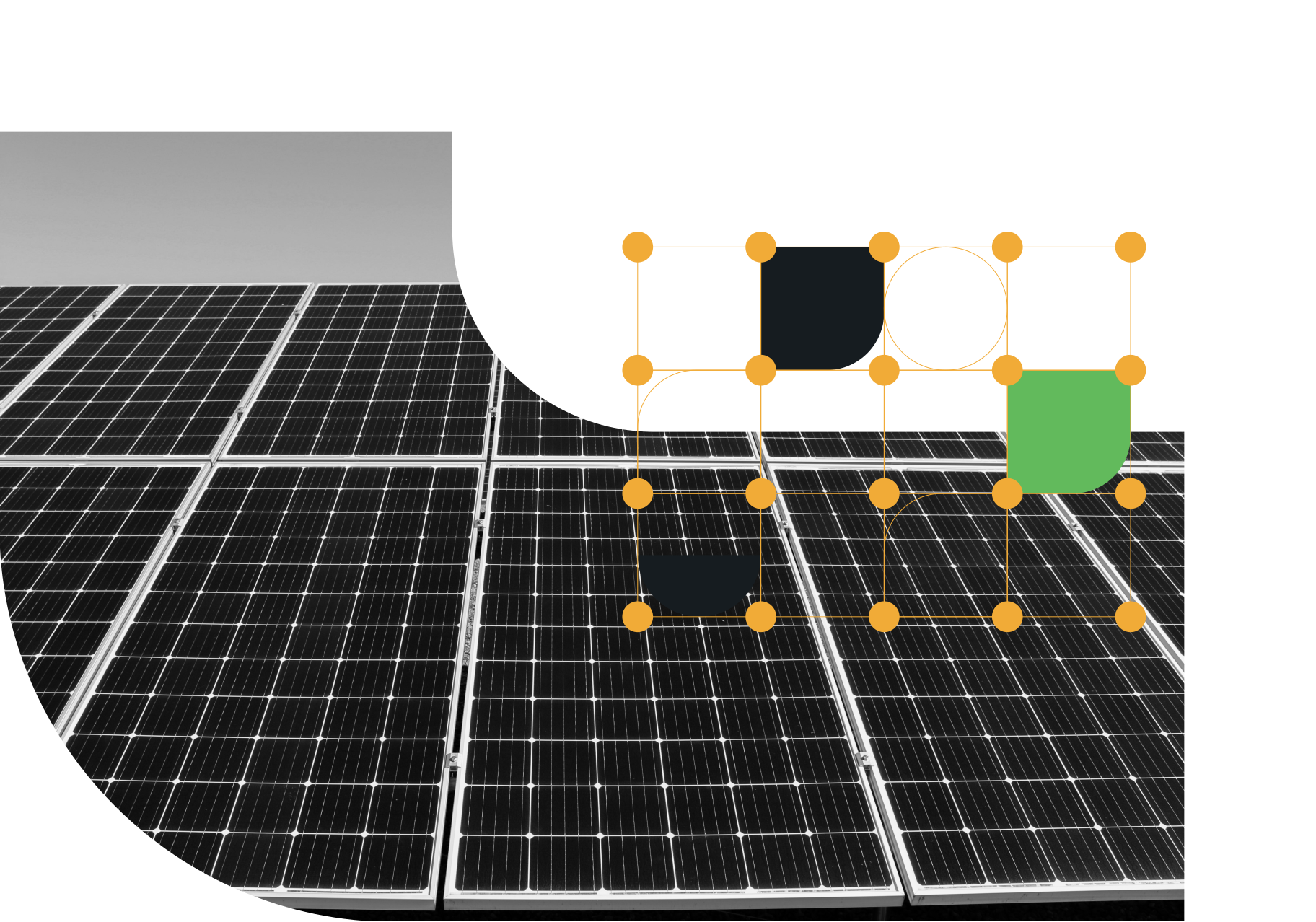
Monocrystalline solar panels have been on the market for the longest time. We usually associate these solar panels with the most common solar panels used for homes. These solar panels are able to produce solar energy from little amounts of sunlight.
Price: Monocrystalline solar cells are slightly more expensive than polycrystalline and thin film solar cells, because the manufacturing process is more complicated.
Technical info: Monocrystalline solar cells consist of a crystal. The solar cells are negatively affected by high temperatures, which does not affect us in Sweden.
Appearance: Monocrystalline solar cells have a black tone.
Efficiency: Approx. 15-22% (the most efficient of all)
Lifespan: After 25 years, you can expect about 80% of the efficiency.
Polycrystalline
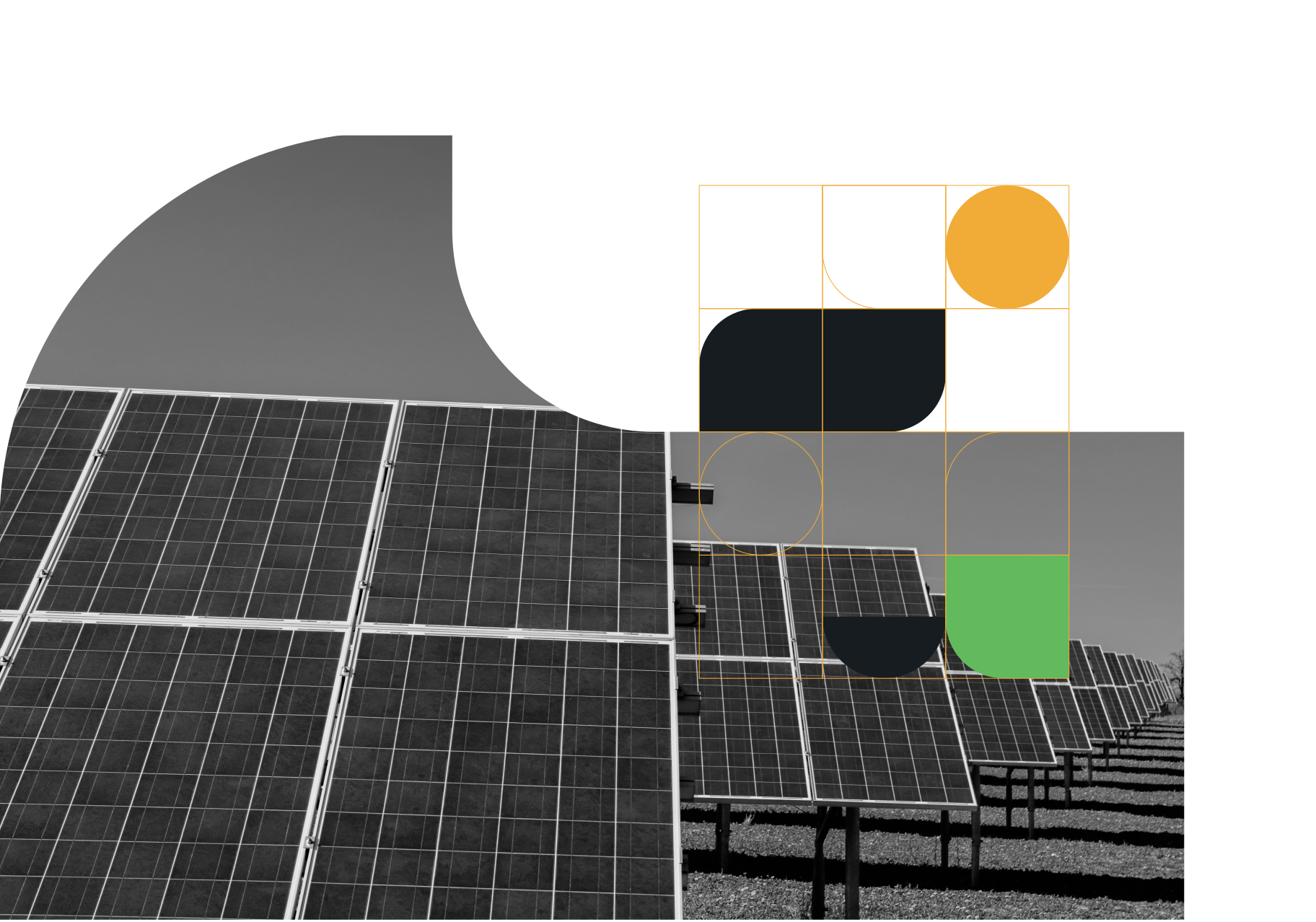
Polycrystalline solar panels are the most common solar cells in solar panels on the market but are considered to be slightly less efficiency than monocrystalline solar cells. Solar cells are often seen at large plants and farms that have plenty of space.
Price: Compared to monocrystalline solar panels, polycrystalline solar panels are slightly cheaper, as the manufacturing process is simpler.
Technical info: Polycrystalline solar cells consist of several crystals in each cell and are not as sensitive to heat as monocrystalline solar cells.
Appearance: Polycrystalline solar cells have a shimmering blue tone.
Efficiency: Approx. 15-17%
Lifespan: After 25 years, you can expect about 80% of efficiency.
Thin-film
Both the appearance and the manufacturing process of thin film solar cells differ from the crystalline solar cells. Foremost, the material can be made to have a flexible texture, which opens up the possibility of using thin film solar cells on rounded surfaces. For example, thin film solar cells can be glued directly to roof tiles.
Price: Thin film solar panels are slightly cheaper than crystalline solar panels, but they do also have a shorter lifespan.
Technical info: Thin film solar cells consist of a thin layer of silicon that is applied to metal, glass, silicon or plastic. Unlike crystalline solar panels, thin film solar panels are not as affected by high temperatures.
Appearance: The solar cells look like black thin film.
Efficiency: Approx. 10-15%
Lifespan: Generally, shorter lifespan than a crystalline solar panel.